
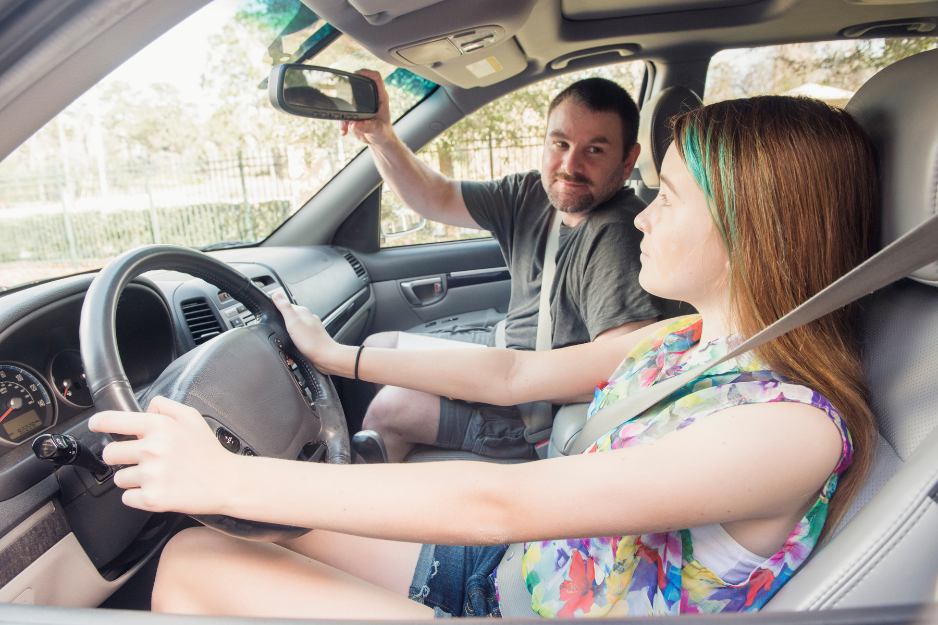
What are the “100 Deadliest Days”? The “100 Deadliest Days” is the stretch from Memorial Day to Labor Day when fatal crashes involving teen drivers spike. AAA’s review of NHTSA crash data shows that more than 13,100 people died in crashes involving teen drivers from 2019 to 2023, with over 30% of those deaths occurring during the summer window — an average of 8 deaths per day, compared to 7 the rest of the year. The leading factors are the same ones that affect all drivers: distracted driving, speeding, impairment, and not wearing seatbelts.
The 100 Deadliest Days: Summer Driving Safety for Families and Commuters
The “100 Deadliest Days” is AAA’s name for the stretch from Memorial Day to Labor Day — the period when fatal crashes involving teen drivers spike every year. The name is dramatic. The numbers behind it are real.
AAA’s review of crash data from the National Highway Traffic Safety Administration shows that more than 13,100 people died in crashes involving teen drivers between 2019 and 2023. Over 30% of those deaths — roughly one in three — occurred during the summer window. That’s an average of 8 people killed per day in teen-involved crashes between Memorial Day and Labor Day, compared to 7 per day during the rest of the year. In 2023 alone, 2,897 people died in crashes involving a teen driver, and 860 of those deaths happened during the 100 Deadliest Days.
The encouraging part: these crashes are preventable. The risk factors are well understood, and the rules that reduce them are specific and actionable. Here’s what the data shows — for families with teen drivers and for every adult who shares the summer road.
Why Summer Is Different
- More free time, more driving. During the school year, teens spend most of the day in class. In summer, they’re on the road — driving to jobs, activities, and social events without the structure that limits weekday driving.
- More unsupervised driving. Without the school schedule, teen drivers spend more time behind the wheel without an experienced adult in the car.
- More night driving. Longer days and later social activities push teen driving into nighttime hours, when crash risk is highest for inexperienced drivers.
- More passengers. Summer means more friends in the car — and as the next section shows, each additional teen passenger increases crash risk measurably.
- Inexperience meets freedom. New teen drivers (ages 16–17) are nearly three times more likely to be involved in a fatal crash than adults (AAA/NHTSA). Summer is when that inexperience meets the least supervision.
The Passenger Effect — The Risk Factor Most Families Don’t Know About
This is the finding that can change behavior the most — and the one fewest families know about.
NHTSA research shows that fatal crash risk for teen drivers increases with each additional teen passenger in the vehicle. The escalation is significant: teen passengers increase both the likelihood of risky driving behavior and the level of distraction inside the car.
The reverse is also true. The presence of an adult passenger aged 35 or older substantially reduces crash risk for teen drivers. An experienced adult in the car changes the driving environment — fewer risky decisions, less distraction, more caution.
This is why AAA and NHTSA recommend clear passenger limits for new teen drivers, and why most state graduated driver licensing (GDL) laws restrict the number of passengers allowed during the first year of licensure.
The practical takeaway for parents: limiting who rides with your teen driver during the first year — and especially during summer — is one of the most effective single safety measures available. It’s not about trust. It’s about the well-documented effect of peer passengers on teen driving behavior.
Drowsy Driving — The Quiet Risk That Affects Everyone
Teen drivers are the headline of the 100 Deadliest Days, but one major risk factor applies to drivers of every age: fatigue.
NHTSA estimates approximately 100,000 police-reported crashes per year involve drowsy driving, resulting in roughly 800 deaths and 50,000 injuries. And these are only the reported cases — the true number is likely higher, because drowsiness is difficult to document after a crash.
Drowsy driving is not just a teen problem. It affects adult commuters, shift workers, and anyone who drives after insufficient sleep. Research indicates that driving after 20 or more hours awake can impair reaction time comparably to driving at the legal blood-alcohol limit (CDC). Fatigue slows reaction time, impairs judgment, and — in the worst case — causes microsleeps of a few seconds that are enough to drift out of a lane at highway speed.
Summer compounds the risk. Heat and extended daylight reduce sleep quality for most people during the warmest months, which means more under-slept drivers on the road. Warning signs of drowsy driving include difficulty keeping your eyes open, drifting from your lane, missing exits or turns, and not remembering the last few miles. (For the science behind why summer specifically disrupts sleep, see our guide to why you sleep worse in summer.)
The honest guidance: if you’re too tired to drive, you’re too impaired to drive. Pull over. Rest. A 20-minute stop is more effective than caffeine or an open window — and the destination can wait.
The Rules That Work for Families
These aren’t vague suggestions to “talk to your teen about safety.” They’re specific, enforceable rules backed by crash data.
| Rule | Why It Works |
| Set clear passenger limits | Each teen passenger increases crash risk. Limit to zero or one non-family passenger during the first year, consistent with most GDL laws. |
| Enforce curfew limits | Night driving is the highest-risk window for teen drivers. State GDL laws typically restrict nighttime driving for new licensees — enforce them even where the law is lenient. |
| Zero phone use while driving | Distraction is a leading cause of teen crashes. No calls, no texts, no social media — even hands-free. The phone goes in the glove box or on do-not-disturb mode. |
| Seatbelts every trip, every seat | Seatbelt use is lower among teen passengers than any other age group. Make it a non-negotiable condition of the car starting — driver and every passenger. |
| 50+ hours of supervised practice | AAA recommends at least 50 hours of supervised driving in diverse conditions: night, rain, highways, busy intersections. Summer is an opportunity to complete this practice with an adult in the car. |
| Model it yourself | Teens replicate what they see. A parent who texts at red lights, speeds, or drives without a seatbelt has given permission for the same behavior. This is the hardest rule — and the most important. |
For Commuters and Teams
The 100 Deadliest Days are named for teen drivers, but summer driving risk extends to every adult on the road — especially commuters and anyone who drives for work.
- Don’t drive drowsy. Summer heat, disrupted sleep, and longer commutes create the conditions for adult drowsy driving. If you catch yourself drifting, pull over. A short rest stop beats pushing through.
- Plan breaks on long trips. AAA recommends stopping every 2 hours or 100 miles on road trips. Summer travel increases highway time — build rest into the schedule rather than powering through to save time.
- Never treat the car as an office. Compressed summer schedules make it tempting to take calls, check email, or compose messages while driving. The distraction risk is the same as any other — and no message is worth it.
- For team leaders: if employees drive as part of their job or commute long distances, a brief summer safety reminder about drowsy and distracted driving takes two minutes and reinforces a culture of safety.
The Bottom Line
The 100 Deadliest Days are not an inevitability. They’re a pattern — and patterns can be interrupted. More than 13,100 people died in teen-involved crashes over five years, a third of them concentrated in the summer window. Behind each number was a preventable set of circumstances: too many passengers, too little experience, a phone in hand, a seatbelt unbuckled, or a driver too tired to be behind the wheel.
For families: set the rules, enforce them through the summer, and model the behavior you want to see. The passenger limit and the phone-away rule are among the most effective. For everyone else on the road: drive rested, plan your breaks, and keep the car a place for driving — not working.
Summer should be the season of freedom and travel. With the right habits, it can be that — safely.
Frequently Asked Questions
What are the “100 Deadliest Days”?
The “100 Deadliest Days” is AAA’s term for the period between Memorial Day and Labor Day, when fatal crashes involving teen drivers spike. AAA’s review of NHTSA data shows more than 30% of fatal teen-driver crashes occur during this window, averaging 8 deaths per day compared to 7 during the rest of the year.
How many people die in teen-driver crashes each summer?
More than 13,100 people died in crashes involving teen drivers from 2019 to 2023, with over 30% occurring during the 100 Deadliest Days (AAA/NHTSA). In 2023, 2,897 people died in teen-involved crashes, and 860 of those deaths happened during the Memorial Day to Labor Day window.
Does having passengers increase crash risk for teen drivers?
Yes. NHTSA research shows fatal crash risk for teen drivers increases with each additional teen passenger. Conversely, the presence of an adult aged 35 or older substantially reduces crash risk. This is why most graduated driver licensing laws limit passengers during the first year of licensure.
How dangerous is drowsy driving?
NHTSA estimates drowsy driving causes approximately 100,000 reported crashes, 800 deaths, and 50,000 injuries per year. Driving after 20+ hours awake can impair reaction time comparably to driving at the legal alcohol limit (CDC). It affects drivers of all ages, not just teens.
What’s the most effective safety rule for new teen drivers?
Passenger limits and zero phone use are among the most effective. Each teen passenger increases crash risk, and distraction is a leading crash cause. Combined with seatbelt use, curfew limits, 50+ hours of supervised practice, and parents modeling safe behavior, these rules address the primary risk factors.
Key Takeaways
- The “100 Deadliest Days” (Memorial Day to Labor Day) account for over 30% of fatal crashes involving teen drivers. More than 13,100 people died in teen-involved crashes from 2019–2023 (AAA/NHTSA).
- 8 people are killed per day in teen-involved crashes during summer, compared to 7 per day the rest of the year. In 2023, 860 of 2,897 teen-involved crash deaths occurred during the 100 Deadliest Days.
- The passenger effect: crash risk for teen drivers increases with each teen passenger and decreases with an adult 35+ in the car (NHTSA). Passenger limits are one of the most effective single safety measures.
- Drowsy driving causes an estimated 100,000 crashes, 800 deaths, and 50,000 injuries per year (NHTSA). Summer heat and disrupted sleep make it worse. If you’re too tired to drive, you’re too impaired to drive.
- Rules that work for families: passenger limits, curfew limits, zero phone use, seatbelts every trip, 50+ hours of supervised practice, and modeling the behavior yourself.
- For commuters: plan breaks every 2 hours on long trips, don’t drive drowsy, and never use the car as a mobile office. Summer driving risks affect adults too.
Published by LifeX Research Corp. LifeX Research Corporation is a health data research organization that analyzes real-world health trends and population health patterns. The organization operates in connection with an ERISA-governed, self-funded employee benefit plan and does not sell, market, broker, or underwrite health insurance.