
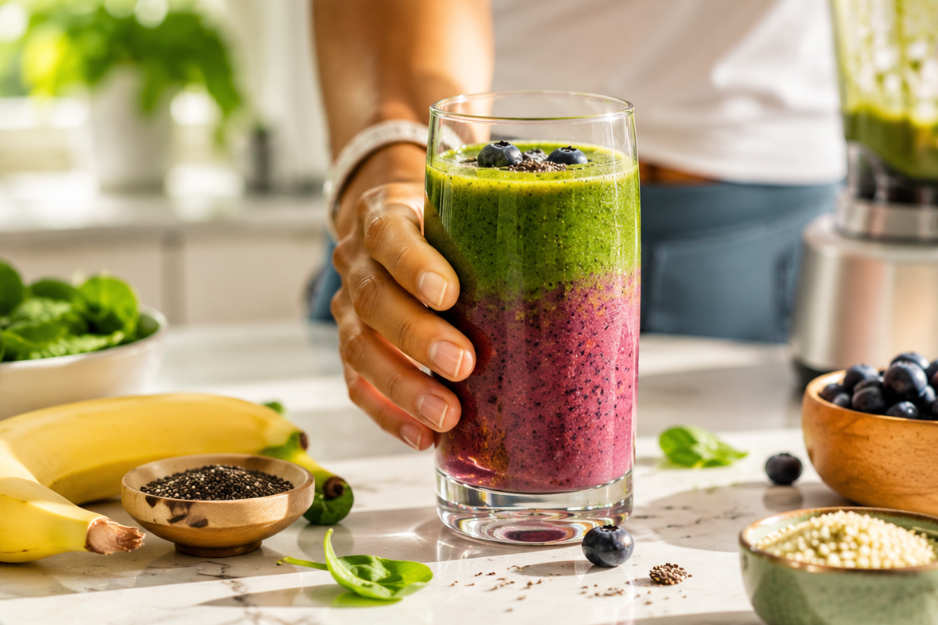
Can one smoothie really address common nutritional gaps?
The USDA Dietary Guidelines for Americans 2020–2025 identify four “nutrients of public health concern” that most Americans underconsume: dietary fiber, potassium, calcium, and vitamin D. A 2017 analysis in the American Journal of Lifestyle Medicine found that 95% of American adults don’t meet the recommended daily fiber intake. A single nutrient-dense smoothie made with the right combination of whole foods — spinach, banana, berries, Greek yogurt, and chia seeds — can contribute roughly a quarter to a third of the daily recommended intake for fiber, potassium, and calcium in about five minutes of preparation time.According to USDA Dietary Guidelines, fiber, potassium, calcium, and vitamin D are nutrients of public health concern because many Americans do not consume enough of them
The 5-Minute Smoothie That Helps Close 3 Common Nutritional Gaps
Here’s a number that reframes how you think about breakfast: 95% of American adults don’t consume enough fiber (American Journal of Lifestyle Medicine, 2017). The recommended daily intake is 25 to 30 grams. The average American gets about 14. That’s a 50% shortfall — across nearly the entire adult population.
Fiber isn’t the only gap. The USDA identifies calcium, potassium, and vitamin D alongside fiber as nutrients of public health concern — meaning most Americans fall short on all four. The American Heart Association, CDC, and National Institutes of Health all link these deficiencies to elevated risk of cardiovascular disease, metabolic conditions, and bone health problems over time.
The good news: this smoothie can contribute meaningful amounts of fiber, potassium, and calcium using five common ingredients, a blender, and about five minutes of your morning. No supplements. No exotic superfoods. Just real food, combined in the right proportions.
The Three Gaps (and Why They Matter More Than You Think)
| Nutrient Gap | How Big the Gap Is | Why It Matters |
| Fiber | 95% of adults fall short. Average intake: ~14g/day. Recommended: 25–30g/day. (USDA; American Journal of Lifestyle Medicine, 2017) | Linked to cardiovascular health, blood sugar regulation, digestive function, and reduced risk of several chronic conditions. A 2019 Lancet meta-analysis of 243 studies found consistent risk reduction with higher fiber intake. |
| Potassium | Average intake: ~2,500mg/day. Recommended: 2,600–3,400mg/day. (USDA/NHANES, 2017–2018) | Supports blood pressure regulation, muscle function, and fluid balance. Low intake is associated with elevated cardiovascular risk (USDA Dietary Guidelines, 2020–2025). |
| Calcium | Multiple population groups fall below recommended intake, particularly younger and older adults. (USDA) | Supports bone density, muscle contraction, and nerve signaling. Chronic underconsumption is associated with increased osteoporosis risk over time (NIH Office of Dietary Supplements). |
Why Are Fiber, Potassium, and Calcium Important?
Fiber, potassium, and calcium play essential roles in overall health and are among the nutrients many Americans do not consume in adequate amounts. Fiber supports digestive health, blood sugar regulation, and heart health. Potassium helps maintain healthy blood pressure, supports muscle function, and regulates fluid balance. Calcium is critical for strong bones, muscle contraction, and nerve signaling. Consistently including nutrient-dense foods that provide these nutrients can help support long-term wellness and reduce the risk of nutrition-related health concerns.
Vitamin D is the fourth USDA nutrient of concern, but it’s primarily obtained through sun exposure and fortified foods — harder to address through a smoothie alone, though fortified dairy or plant milks in the recipe contribute a small amount.
The pattern across all three gaps is the same: the deficiency isn’t dramatic enough to cause acute symptoms, so people don’t notice it. It compounds quietly over years and decades, contributing to the chronic conditions that drive the majority of healthcare spending. Closing these gaps isn’t about dramatic dietary overhauls. It’s about small, consistent habits — like the one below.
The Smoothie: Five Ingredients, Three Gaps, Five Minutes
Base recipe (serves 1):
- 1 cup fresh or frozen spinach (~30g) — fiber + calcium + potassium + folate
- 1 medium banana (fresh or frozen) — potassium + fiber + natural sweetness
- ½ cup mixed berries (blueberries, strawberries, or raspberries) — fiber + vitamin C
- ¾ cup plain Greek yogurt — calcium + protein + potassium
- 1 tablespoon chia seeds — fiber + calcium + omega-3 fatty acids
- ½ to 1 cup water or milk (dairy or fortified plant-based) — adjust to preferred thickness
Instructions: Add all ingredients to a blender. Blend for 60–90 seconds until smooth. Pour. Done.
Tip: Freezing the banana before blending creates a thicker, colder texture — closer to a milkshake than a juice. Frozen berries work the same way and are often less expensive than fresh.
What This Smoothie Actually Delivers
Here’s the approximate nutritional contribution per serving, based on USDA FoodData Central values for each ingredient:
| Nutrient | Amount in This Smoothie | Daily Recommended | % of Daily Target |
| Fiber | ~8–10g | 25–30g | ~30–35% |
| Potassium | ~800–1,000mg | 2,600–3,400mg | ~25–35% |
| Calcium | ~300–400mg | 1,000–1,200mg | ~25–35% |
| Protein | ~15–18g | Varies by individual | Meaningful contribution |
| Vitamin C | ~30–40mg | 75–90mg | ~35–50% |
One five-minute habit delivers roughly a quarter to a third of three nutrients that over 90% of Americans don’t get enough of. It doesn’t close the entire gap on its own — the rest of your meals matter too. But it moves the needle more in five minutes than most dietary changes people attempt.
Note: These are approximate values based on USDA FoodData Central data for standard serving sizes. Actual nutritional content varies by product, brand, and preparation. This information is educational, not dietary advice. Individuals with specific nutritional needs or health conditions may wish to consult a registered dietitian or healthcare provider.
Why These Specific Ingredients (Not Random Superfoods)
Every ingredient in the recipe is there for a reason — and the reason is nutrient density per calorie, not trend appeal.
Spinach
One of the most nutrient-dense foods per calorie available at any grocery store. Delivers fiber, calcium, potassium, folate, and iron. The flavor is mild when blended with fruit — most people can’t taste it. Kale is a reasonable substitute with a slightly stronger flavor and a similar nutritional profile.
Banana
The potassium anchor. One medium banana provides approximately 422mg of potassium (USDA). It also contributes fiber and natural sweetness, which means no added sugar is needed. Freezing before blending doubles as a texture upgrade — thicker, colder, smoother.
Mixed Berries
Among the highest fiber-to-calorie ratios of any common fruit. One cup of raspberries contains approximately 8g of fiber (USDA). Blueberries and strawberries are slightly lower but still strong contributors. Berries are also high in vitamin C and polyphenols. Frozen berries are nutritionally equivalent to fresh and significantly cheaper.
Greek Yogurt
The calcium and protein source. A ¾-cup serving of plain Greek yogurt provides approximately 200mg of calcium and 15g of protein (USDA). It also contributes potassium. Plain varieties avoid the 15–20 grams of added sugar found in most flavored yogurts.
Chia Seeds
A small ingredient with outsized nutritional contribution. One tablespoon provides approximately 4g of fiber and 90mg of calcium (USDA), plus omega-3 fatty acids. They expand slightly when blended, adding body to the smoothie without changing the flavor.
Nothing in this list is expensive, hard to find, or unfamiliar. That’s intentional. The value of this recipe is not novelty — it’s nutrient density per minute of preparation time, using ingredients available at any standard grocery store.
Three Variations for When You Want to Mix It Up
Same nutrient-targeting logic, different flavor profiles. Each variation addresses the same three gaps.
The Tropical
½ cup mango + ½ cup pineapple + 1 cup spinach + ¾ cup coconut yogurt + 1 tbsp chia seeds + water
Potassium-heavy. Dairy-free. Tastes like a vacation. Mango and pineapple are both strong potassium sources.
The Chocolate
1 banana + 1 tbsp unsweetened cocoa powder + ¾ cup Greek yogurt + ¼ cup rolled oats + 1 cup spinach + milk
Fiber-heavy (oats add approximately 4g). The cocoa and banana combination reads as dessert. The spinach is invisible.
The Green Power
1 cup kale + ½ avocado + 1 banana + ¾ cup plain kefir + 1 tbsp ground flaxseed + water
All three gaps plus healthy fats from avocado and flaxseed. Kefir adds calcium plus probiotics. The most nutrient-dense variation.
The Bigger Picture: Nutrition as a Five-Minute Daily Habit
The pattern across preventive health research is remarkably consistent. Daily sunscreen use reduces skin cancer risk. Regular physical activity reduces cardiovascular risk.
Daily sunscreen use reduces skin cancer risk. Regular physical activity reduces cardiovascular risk. Consistent sleep habits improve cognitive performance and metabolic health. And daily nutrient-dense eating reduces the chronic disease risk associated with the deficiencies that 90%+ of Americans carry without realizing it.
A smoothie is not a medical intervention. It is a five-minute daily habit that addresses three documented nutritional shortfalls using whole foods — the kind of small, upstream behavior that compounds into meaningfully different health trajectories over years and decades. (For more on how small upstream health behaviors compare economically to downstream treatment, see our analysis of prevention vs. treatment cost differences.)
The most sustainable health habits are the ones simple enough to do every single day without negotiating with yourself about whether today is the day. Five ingredients. One blender. Five minutes. Three gaps partially closed before you leave the house.
Frequently Asked Questions
What are the most common nutritional gaps in the American diet?
The USDA Dietary Guidelines for Americans 2020–2025 identify four nutrients of public health concern due to widespread underconsumption: dietary fiber, potassium, calcium, and vitamin D. Of these, fiber has the largest gap — 95% of American adults don’t meet the recommended intake (American Journal of Lifestyle Medicine, 2017).
How much fiber do Americans actually need per day?
The USDA recommends 25–30 grams of dietary fiber per day for adults, depending on age and sex. The American Heart Association recommends 25–30 grams from food sources. The current average intake is approximately 14 grams per day — roughly half the recommended amount.
Can one smoothie help improve fiber, potassium, and calcium intake?
A single nutrient-dense smoothie can provide approximately 25–35% of the daily recommended intake for fiber, potassium, and calcium. It does not close the entire gap alone — the rest of the day’s meals matter. But as a consistent daily habit, it addresses a meaningful portion of three nutrients that the vast majority of Americans underconsume.
Is frozen fruit as nutritious as fresh for smoothies?
Research indicates that frozen fruits and vegetables retain most of their nutritional value. Fruits are typically frozen at peak ripeness, which may preserve nutrient content better than fresh produce that has been transported and stored for extended periods. The USDA considers frozen and fresh produce nutritionally comparable for most purposes.
What’s the easiest way to increase daily fiber intake?
Research consistently points to whole food sources: fruits, vegetables, legumes, whole grains, nuts, and seeds. Berries, chia seeds, oats, and leafy greens are among the most fiber-dense common foods. A smoothie combining several of these sources can deliver 8–10 grams of fiber — closing roughly a third of the average American’s daily fiber gap in a single serving.
Key Takeaways
- The USDA identifies fiber, potassium, calcium, and vitamin D as “nutrients of public health concern” — meaning most Americans don’t consume enough of any of them.
- 95% of American adults don’t meet the recommended daily fiber intake (American Journal of Lifestyle Medicine, 2017). The average intake is roughly half the recommended 25–30 grams per day.
- A single smoothie made with spinach, banana, berries, Greek yogurt, and chia seeds can provide approximately 25–35% of the daily recommended intake for fiber, potassium, and calcium.
- Every ingredient is available at a standard grocery store. The value is nutrient density per minute of preparation — not novelty or trend appeal.
- Small, consistent nutritional habits compound over time. Five minutes a day is a meaningful preventive health investment when sustained across weeks, months, and years.
Published by LifeX Research Corp. LifeX Research Corporation is a health data research organization that analyzes real-world health trends and population health patterns. The organization operates in connection with an ERISA-governed, self-funded employee benefit plan and does not sell, market, broker, or underwrite health insurance.