
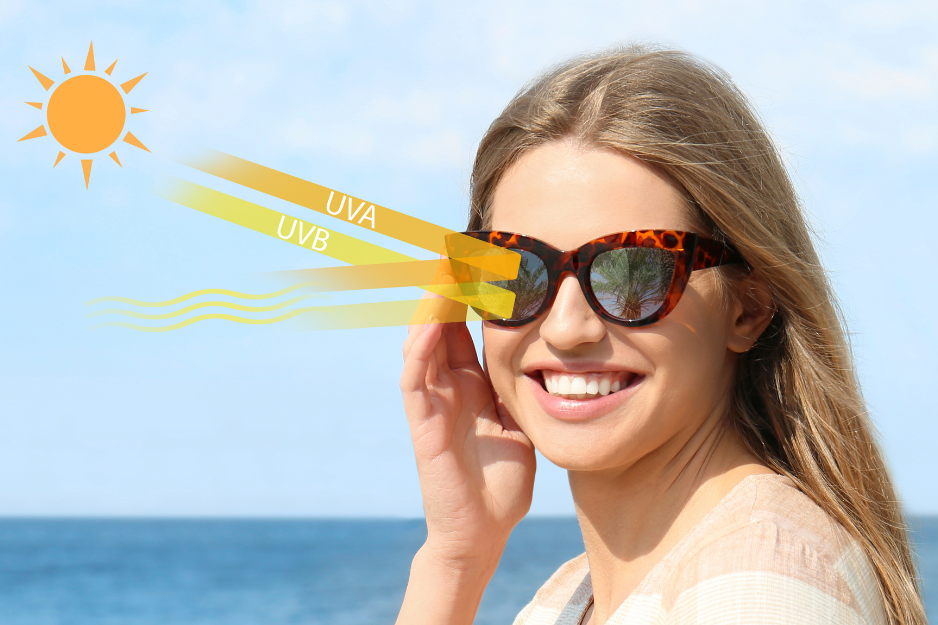
Can UV damage your eyes? Yes. UV radiation damages eyes, not just skin. The World Health Organization estimates that up to 20% of cataracts worldwide may be linked to UV exposure. The American Academy of Ophthalmology warns that cumulative UV exposure raises the risk of cataracts, growths on the eye, and eye cancers over time. Effective UV eye protection requires sunglasses labeled “100% UV” or “UV400” — lens darkness alone does not indicate UV protection.
Don’t Forget Your Eyes: Summer UV Protection Isn’t Just About Skin
You applied sunscreen this morning. You put on a hat. You checked the UV index. But did you grab sunglasses? Most people are significantly more consistent about protecting their skin from UV than protecting their eyes — even though UV radiation damages both. The American Academy of Ophthalmology (AAO) warns that UV exposure raises the risk of cataracts, growths on the eye, and eye cancers over time. The World Health Organization estimates that up to 20% of cataract cases globally may be linked to UV overexposure. And short-term, a single day of intense sun without eye protection can cause photokeratitis — essentially a sunburn on the surface of your eye.
Your skin gets sunscreen. Your eyes deserve the same attention. (For a complete guide to UV skin protection, see our summer sun damage prevention guide.)
What UV Actually Does to Your Eyes
Short-Term: Photokeratitis (“Sunburn of the Eye”)
Photokeratitis is caused by intense UV exposure over a short period — a day at the beach without sunglasses, glare reflected from water or sand, or a snow-bright ski slope without goggles. The American Optometric Association (AOA) describes it as a “sunburn of the eye.”
Symptoms include red eyes, a gritty or foreign-body sensation, extreme sensitivity to light, excessive tearing, and pain. The condition is also known as “snow blindness” when caused by UV reflecting off snow. Photokeratitis is painful but usually temporary — symptoms typically resolve within 24 to 48 hours (AOA, Cleveland Clinic).
Long-Term: The Cumulative Damage Most People Don’t Think About
The more consequential damage is the kind that builds invisibly over years and decades:
- Cataracts. WHO estimates up to 20% of cataracts may be linked to UV exposure. Cataracts — clouding of the eye’s natural lens — are the leading cause of blindness worldwide. UV accelerates the protein changes in the lens that cause this clouding.
- Pterygium (“surfer’s eye”). A growth on the white of the eye that can extend over the cornea and affect vision. Strongly associated with chronic UV exposure, particularly in people who spend significant time outdoors near water or reflective surfaces.
- Pinguecula. A yellowish raised bump on the white of the eye caused by UV damage to the conjunctival tissue. Common in people with high cumulative sun exposure.
- Eye cancers. UV exposure is a risk factor for ocular melanoma and other cancers of the eye and surrounding structures (AAO).
- Macular degeneration. UV may contribute to the progression of age-related macular degeneration (AMD), a leading cause of vision loss in older adults.
The critical insight: the UV exposure that contributes to cataracts at 65 didn’t come from a single vacation. It accumulated over decades of daily unprotected exposure — commutes, lunch breaks, yard work, walking the dog. The damage is invisible until it reaches a clinical threshold. That’s why consistent daily protection matters more than occasional protection during high-exposure events.
Clouds Don’t Save You — and Neither Does Shade Alone
- Up to 80% of UV radiation penetrates cloud cover (Skin Cancer Foundation). Overcast days create a false sense of security for eyes just as they do for skin.
- UV is strongest between 10 a.m. and 4 p.m. — the same peak window that applies to skin exposure.
- Reflected UV from water, sand, pavement, and snow can be as damaging as direct sunlight — sometimes more so, because reflected UV often hits the eyes from below, an angle standard sunglasses may not fully cover.
- Altitude increases UV intensity. Hikers, skiers, and workers at elevation face higher UV exposure per hour than those at sea level.
- UVA penetrates standard glass. People who sit near windows for extended periods daily accumulate meaningful UV exposure to their eyes without ever going outside.
How to Choose Sunglasses That Actually Protect Your Eyes
This is the section worth saving to your phone for the next time you buy sunglasses. One spec matters above all others — and it’s not the one most people check.
| What to Look For | Why It Matters |
| “100% UV protection” or “UV400” on the label | UV400 means the lenses block all ultraviolet light up to 400 nanometers — the full UVA + UVB spectrum. This is the single most important specification. If it’s not on the label, don’t assume it’s there. |
| Darker lenses ≠ more UV protection | Lens darkness affects how much visible light reaches your eyes. It does NOT indicate UV-blocking ability. The UV-blocking coating is what provides protection. Dark lenses WITHOUT UV coating are actually worse — they cause your pupils to dilate, allowing MORE UV to enter the eye. |
| Polarization ≠ UV protection | Polarized lenses reduce glare from reflective surfaces (water, pavement, snow). This improves visual comfort and clarity. But polarization alone does not block UV. Confirm that polarized lenses also carry a UV400 or 100% UV rating separately. |
| Wraparound or oversized frames | UV enters the eye from the sides, top, and bottom of standard frames. Wraparound styles or large lenses that sit close to the face block peripheral UV. AAO recommends these for comprehensive coverage. |
| Price is not an indicator of protection | A $15 pair with confirmed UV400 protection blocks the same UV as a $300 designer pair with the same rating. Check the label, not the price tag. |
The dangerous pair of sunglasses: dark lenses with no UV coating. They look protective. They feel comfortable because they reduce visible light. But they actually increase UV damage — the darkness causes your pupils to open wider, and without UV-blocking coating, more ultraviolet radiation reaches the retina and lens than if you wore no sunglasses at all. If there’s one takeaway from this section, it’s this: check the UV label before you check the style.
Layer Your Protection: Sunglasses Aren’t the Only Tool
- Wide-brim hat + sunglasses. A wide-brimmed hat can reduce direct UV reaching the eyes by up to 50% (Vision Center). Combined with UV400 sunglasses, this provides the most comprehensive eye protection available — especially during midday when UV comes from a steep overhead angle.
- UV-blocking contact lenses add a layer of coverage for the portion of the eye they cover. However, they do not protect the eyelids, surrounding skin, or the full surface of the eye. UV-blocking contacts supplement sunglasses; they do not replace them (AOA).
- Seek shade during peak hours (10 a.m.–4 p.m.) when UV intensity is at its daily maximum. Note that reflected UV from surfaces can still reach eyes even in shaded areas — sunglasses remain important in shade near water, sand, or pavement.
- Combine with skin protection. The skin around the eyes is among the thinnest on the body and is frequently missed during sunscreen application. Sunglasses protect both the eyes and the delicate skin surrounding them.
Kids and Outdoor Workers: Higher Cumulative Exposure
Children
Children receive approximately three times more annual UV exposure than adults — they spend more time outdoors and have clearer ocular lenses that filter less UV than adult lenses (Vision Center). The UV damage that contributes to cataracts and other conditions later in life begins accumulating in childhood.
Starting a sunglasses habit early means decades of reduced cumulative exposure. The AAO recommends sunglasses and hats for children whenever they are outdoors in significant sunlight. UV-protective sunglasses designed for children are widely available at the same price points as adult versions.
Outdoor Workers
Workers in construction, agriculture, landscaping, roofing, transportation, and utilities face elevated cumulative UV exposure to their eyes over careers — not just to their skin. Reflected UV from pavement, metal, water, and glass compounds the direct UV exposure.
Providing UV-protective eyewear for outdoor work roles follows the same prevention logic as providing sunscreen access. The difference is that eye damage from UV is often invisible for years, which means the incentive to protect is less intuitive — even though the long-term consequences (cataracts, growths, potential vision loss) can be more disruptive than sunburn. (For more on workplace heat and UV safety during summer, see our guide to heat exhaustion vs. heat stroke at work.)
When to See an Eye Doctor
- Schedule regular comprehensive eye exams. The AAO recommends a baseline exam at age 40 for adults with no risk factors, and more frequently for those with risk factors, existing conditions, or family history of eye disease.
- Seek care for persistent vision changes — new floaters, flashes of light, blurred vision, or eye pain, especially after significant sun exposure.
- If you experience photokeratitis symptoms (red, gritty, painful eyes after intense UV exposure), symptoms typically resolve within 48 hours. Seek care if they persist beyond that window or if vision is affected.
- Eye exams can detect UV-related changes early. Developing cataracts, pterygium, and other UV-related conditions can be identified during routine exams before they affect vision — another reason consistent eye care matters as much as consistent eye protection.
The Bottom Line
UV protection for your eyes is the same daily habit as UV protection for your skin — just one that far fewer people practice consistently. Sunglasses with confirmed UV400 or 100% UV protection are the primary tool. A wide-brim hat adds up to 50% more coverage. And checking the UV rating before you check the style is the one habit that separates effective protection from expensive decoration.
The damage from UV is cumulative and invisible for years. The protection takes two seconds: grab a pair of rated sunglasses on your way out the door, every time. Your future self sees the difference.
Frequently Asked Questions
Can UV really damage your eyes?
Yes. The American Academy of Ophthalmology confirms that UV exposure raises the risk of cataracts, growths on the eye (pterygium, pinguecula), and eye cancers. The World Health Organization estimates that up to 20% of cataracts worldwide may be linked to UV overexposure. Short-term intense exposure can cause photokeratitis, a painful but usually temporary “sunburn” of the eye’s surface.
What kind of sunglasses actually protect against UV?
Look for sunglasses labeled “100% UV protection” or “UV400.” UV400 means the lenses block all ultraviolet light up to 400 nanometers, covering the full UVA and UVB spectrum. Lens darkness, polarization, and price are not indicators of UV protection. A $15 UV400-rated pair provides the same UV blocking as expensive designer sunglasses with the same rating.
Do darker sunglasses provide more UV protection?
No. Lens darkness controls how much visible light reaches your eyes, not how much UV is blocked. The UV-blocking coating provides the protection, regardless of tint. Dark lenses without UV coating are actually more harmful than no sunglasses at all — the darkness dilates your pupils, allowing more UV radiation to enter the eye.
Can you get a sunburn on your eyes?
Yes. Photokeratitis is essentially a sunburn on the surface of the eye, caused by intense short-term UV exposure. Symptoms include red eyes, gritty sensation, light sensitivity, and pain. It’s most common after a day at the beach without sunglasses or from reflected glare off water, sand, or snow. Symptoms are usually temporary, resolving within 24 to 48 hours.
Do children need sunglasses?
Children receive approximately three times more annual UV exposure than adults and have clearer ocular lenses that filter less UV (Vision Center). UV damage to the eye begins accumulating in childhood. The AAO recommends sunglasses and hats for children whenever they are outdoors in significant sunlight. UV-protective children’s sunglasses are widely available at standard price points.
Key Takeaways
- UV radiation damages eyes, not just skin. WHO estimates up to 20% of cataracts worldwide may be linked to UV exposure. Cumulative damage raises the risk of cataracts, eye growths, and eye cancers over time (AAO).
- Photokeratitis — “sunburn of the eye” — is caused by intense short-term UV exposure. Symptoms include red eyes, pain, and light sensitivity, typically resolving within 24–48 hours.
- The only sunglasses spec that matters for UV: “100% UV” or “UV400.” Lens darkness, price, and polarization alone do not indicate UV protection.
- Dark lenses without UV coating are worse than no sunglasses — they dilate pupils, letting more UV reach the eye. Check the UV label before you check the style.
- Layer protection: UV400 sunglasses + wide-brim hat (reduces direct UV to eyes by up to 50%). UV-blocking contacts supplement but do not replace sunglasses.
- Children receive approximately 3x more annual UV exposure than adults. Starting the sunglasses habit early reduces decades of cumulative damage.
Published by LifeX Research Corp. LifeX Research Corporation is a health data research organization that analyzes real-world health trends and population health patterns. The organization operates in connection with an ERISA-governed, self-funded employee benefit plan and does not sell, market, broker, or underwrite health insurance.