
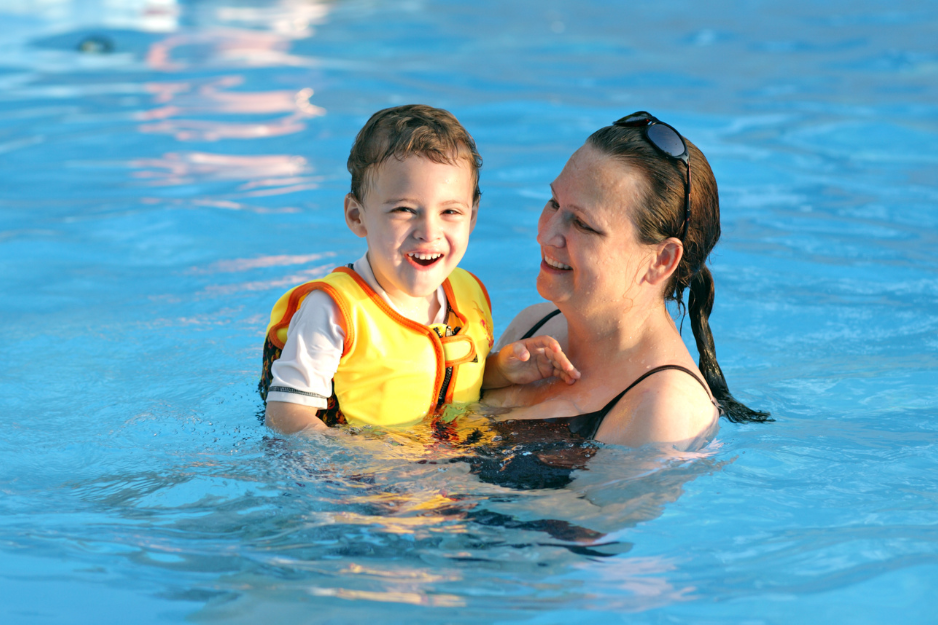
How can you prevent drowning?
Drowning is the leading cause of death for children ages 1–4 in the United States and the second leading cause of unintentional injury death for children ages 5–14 (CDC). Over 4,500 Americans drown each year (CDC, 2020–2022). Drowning happens fast and silently — it rarely looks like the movies. CDC recommends a “layers of protection” approach: close constant supervision within arm’s reach, four-sided pool fencing, formal swimming lessons, and Coast Guard–approved life jackets. No single measure is enough. The layers work together.
Water Safety 101: Preventing Drowning and Staying Healthy at the Pool and Lake
Drowning is the number one cause of death for children ages 1 to 4 in the United States. Not car accidents. Not illness. Drowning (CDC).
Over 4,500 Americans of all ages drown each year — roughly 500 more per year than in 2019 (CDC, 2020–2022). And here is the fact that changes how you supervise: drowning is fast and silent. There is no splashing, no screaming, no waving arms. A child can go under in seconds, without a sound. Safe Kids Worldwide reports that 88% of children who drown had at least one adult present. The issue is rarely that no one was there. It’s that no one was watching closely enough, constantly enough, in the critical moment.
The good news: drowning is preventable. A few consistent habits — applied together, every time — dramatically reduce the risk. Here’s what works.
The Numbers Everyone Should Know
- 4,500+ unintentional drowning deaths per year in the U.S. (CDC, 2020–2022)
- #1 cause of death for children ages 1–4 (CDC)
- #2 cause of unintentional injury death for children ages 5–14, after motor vehicle crashes (CDC)
- 88% of children who drown had at least one adult present (Safe Kids Worldwide)
- 70% of toddler drownings occur during non-swim time — when children were not expected to be near water (Safe Kids Worldwide)
- 80% of drowning deaths involve males (CDC)
- 55% of U.S. adults have never taken a swimming lesson (CDC)
These are not rare events. They are common, predictable, and in most cases, preventable.
Layers of Protection — The CDC Framework That Works
No single safety measure prevents drowning on its own. CDC’s approach uses layers — multiple protections that overlap so that if one fails, others catch the gap. Four layers form the foundation.
Layer 1: Close, Constant Supervision
For children under 5 or weak swimmers, CDC recommends “touch supervision” — staying within arm’s reach at all times when they are in or near water.
- Designate a specific adult as the water watcher. Not “someone is around.” A named person whose only job during that rotation is watching the water.
- No phones, no books, no side conversations during water watch duty. Distraction during supervision is the most common factor in child drownings.
- When multiple adults are present, assign rotation shifts. The moment everyone assumes someone else is watching is the moment supervision fails.
Layer 2: Four-Sided Pool Fencing
- A fence on all four sides that fully separates the pool from the house and yard — at least 4 feet tall with self-closing, self-latching gates (CDC)
- Four-sided isolation fencing significantly outperforms three-sided fencing that uses the house as one wall (NIH)
- 59% of drowning deaths among children ages 1–4 occur in swimming pools (CDC). Fencing is the physical barrier that prevents unsupervised access.
Layer 3: Formal Swimming Lessons
- CDC: formal swimming lessons can reduce the risk of drowning
- NIH-published research: swim lessons may reduce drowning risk in children ages 1–4 by up to 88%
- 55% of U.S. adults have never taken a swimming lesson (CDC). The skill gap is significant.
- Important: children who have had swimming lessons still need close supervision. Swimming ability reduces risk but does not eliminate it.
Layer 4: Coast Guard–Approved Life Jackets
- U.S. Coast Guard: 83% of people who died in boating-related drownings were not wearing a life jacket (2021)
- Life jackets are essential in open water — lakes, rivers, oceans — and on every boat
- Every person on a boat needs a properly fitted, Coast Guard–approved life jacket. Not just children.
Floaties Are Not Safety Devices
This myth is widespread enough to deserve its own section.
Water wings, inflatable arm bands, pool noodles, and inflatable swim rings are toys. They are not designed to prevent drowning and they do not (CDC). They can deflate, slip off, or tip a child face-down in the water. They also create a false sense of security — both for the child wearing them and for the adult who thinks the child is protected.
A properly fitted Coast Guard–approved life jacket is the only flotation device designed and tested to keep a person’s head above water. If a child needs flotation assistance to be safe, they need a life jacket, not a toy.
Natural Water Hazards — Lakes, Rivers, and Oceans
Natural water is different from a pool, and the risks are different too.
- Currents. Rivers have currents that can pull even strong swimmers downstream. Oceans have rip currents — the leading hazard at surf beaches. If caught in a rip current, swim parallel to shore, not against the current.
- Cold water. Even in summer, lakes and rivers can be significantly colder below the surface. Cold water shock can impair breathing and swimming ability within seconds.
- Limited visibility. You cannot see the bottom in most natural water. Submerged rocks, drop-offs, debris, and vegetation create hazards you cannot spot from the surface.
- No lifeguards. Most natural water settings are unsupervised. You are your own safety system.
- Life jackets for everyone. CDC recommends life jackets for everyone in open water settings, regardless of swimming ability.
Alcohol and Water Don’t Mix
The data on this point is clear and doesn’t need editorial:
- Alcohol is involved in up to 70% of deaths associated with water recreation, including swimming and boating (CDC)
- Nearly 1 in 4 emergency department visits for drowning involve alcohol (CDC)
- Alcohol impairs judgment, balance, and coordination — the three capabilities you need most in water
CDC recommends avoiding alcohol while swimming, boating, or supervising children in or near water. Certain medications can also impair balance and coordination in water — CDC specifically notes that psychotropic medications prescribed for depression, anxiety, and related conditions can increase drowning risk.
Healthy Swimming — Keeping the Water Safe for Everyone
Drowning prevention is the most critical piece of water safety. But the water itself can make you sick if basic hygiene habits are skipped. CDC’s “healthy swimming” guidance:
- Don’t swim when you have diarrhea. One person with a diarrheal illness can contaminate an entire pool. Crypto and other germs can survive in properly chlorinated water for days.
- Don’t swallow pool water. Even well-maintained pools can contain germs. Teach children to keep their mouths closed when swimming.
- Shower with soap before entering the pool. Removes sweat, oils, and traces of fecal matter that feed bacteria and reduce chlorine effectiveness.
- Take children on bathroom breaks every 60 minutes. Check swim diapers for young children. Regular breaks reduce the chance of accidents in the water.
- Dry ears thoroughly after swimming. Trapped water in the ear canal creates conditions for swimmer’s ear (otitis externa). Tilt the head and gently dry with a towel after every swim. (For more on swimmer’s itch and other water-related skin reactions, see our summer rash guide.)
- Check water quality advisories before swimming in natural water. Algal blooms and elevated bacteria levels can make lakes and beaches unsafe. Local health departments post advisories when conditions exceed safe limits.
Learn CPR — The Skill That Fills the Gap
Prevention is the priority. But when prevention fails, CPR can sustain blood flow and oxygen delivery in the critical minutes before emergency services arrive.
This blog cannot teach CPR — it requires hands-on training. But it can point you to where that training is available:
- American Red Cross — offers in-person and online CPR courses nationwide
- American Heart Association — offers Heartsaver and BLS courses for community members
- Many local fire departments and community centers offer free or low-cost CPR training
A CPR-trained bystander can be the difference between a drowning incident and a drowning death. The skill takes hours to learn and lasts a lifetime.
For Teams, Families, and Neighbors
- Company picnics, team outings, and workplace events near water carry the same risks as family gatherings. Designate a water watcher whenever children or non-swimmers are near water at any event.
- Community pools and neighborhood lakes are shared spaces. Watching out for other people’s children is part of community safety — not overstepping.
- During heat waves, more people seek water to cool off — often in unsupervised settings like creeks, retention ponds, or neighborhood pools without lifeguards. This is when drowning risk spikes.
- Talk to your kids about water rules before you get to the water. Not after. The conversation about staying in the shallow end, not running on the deck, and telling an adult before going near the water takes 30 seconds and sets the expectation before excitement takes over.
The Bottom Line
Over 4,500 Americans drown each year. Drowning is the number one cause of death for children ages 1 to 4. And 88% of children who drown had at least one adult present.
The prevention framework is straightforward: supervise constantly and closely. Fence the pool on all four sides. Invest in swimming lessons. Use Coast Guard–approved life jackets in open water and on boats. Never rely on floaties as safety devices. Skip the alcohol when you’re in, on, or supervising anyone near water.
These are simple rules. They don’t require equipment or expense. They require consistency — every time, every pool, every lake, every trip. The incidents that don’t happen are the ones you’ll never have to think about again. That’s the point.
Frequently Asked Questions
What is the leading cause of death for children ages 1–4?
Drowning. More children ages 1–4 die from drowning than any other cause of death in the United States (CDC). Drowning is the second leading cause of unintentional injury death for children ages 5–14, after motor vehicle crashes.
Are floaties and water wings safe for children?
No. Water wings, inflatable arm bands, pool noodles, and swim rings are toys, not safety devices (CDC). They can deflate, slip off, or tip a child face-down. A properly fitted Coast Guard–approved life jacket is the only flotation device designed to keep a head above water.
How can you prevent drowning at home pools?
CDC recommends a layers-of-protection approach: close constant supervision within arm’s reach for young children, four-sided isolation fencing with self-closing gates, formal swimming lessons for children and adults, and removing toys from the pool area when not in use. No single measure is sufficient alone.
Does alcohol increase drowning risk?
Significantly. CDC reports that alcohol is involved in up to 70% of deaths associated with water recreation and nearly 1 in 4 ER visits for drowning. Alcohol impairs judgment, balance, and coordination. CDC recommends avoiding alcohol while swimming, boating, or supervising anyone near water.
What is “healthy swimming”?
CDC’s healthy swimming guidance includes: don’t swim with diarrhea, don’t swallow pool water, shower before entering the pool, take children on bathroom breaks every 60 minutes, and dry ears after swimming. These habits keep recreational water safe for everyone and reduce the spread of waterborne illness.
Key Takeaways
- Drowning is the #1 cause of death for children ages 1–4 and the #2 cause of unintentional injury death for ages 5–14 (CDC). Over 4,500 Americans drown each year. Drowning is fast, silent, and preventable.
- CDC’s layers of protection: close constant supervision within arm’s reach, four-sided pool fencing with self-closing gates, formal swimming lessons, and Coast Guard–approved life jackets. No single layer is enough on its own.
- Floaties, water wings, and pool noodles are toys, not safety devices (CDC). A Coast Guard–approved life jacket is the only device designed to keep a person’s head above water.
- Alcohol is involved in up to 70% of water recreation–associated deaths (CDC). Avoid alcohol while swimming, boating, or supervising children.
- Healthy swimming: don’t swim with diarrhea, shower before the pool, don’t swallow pool water, dry ears after swimming, and take bathroom breaks every 60 minutes (CDC).
- CPR training fills the gap between an incident and emergency response. American Red Cross and American Heart Association offer widely available courses.
Published by LifeX Research Corp. LifeX Research Corporation is a health data research organization that analyzes real-world health trends and population health patterns. The organization operates in connection with an ERISA-governed, self-funded employee benefit plan and does not sell, market, broker, or underwrite health insurance.