
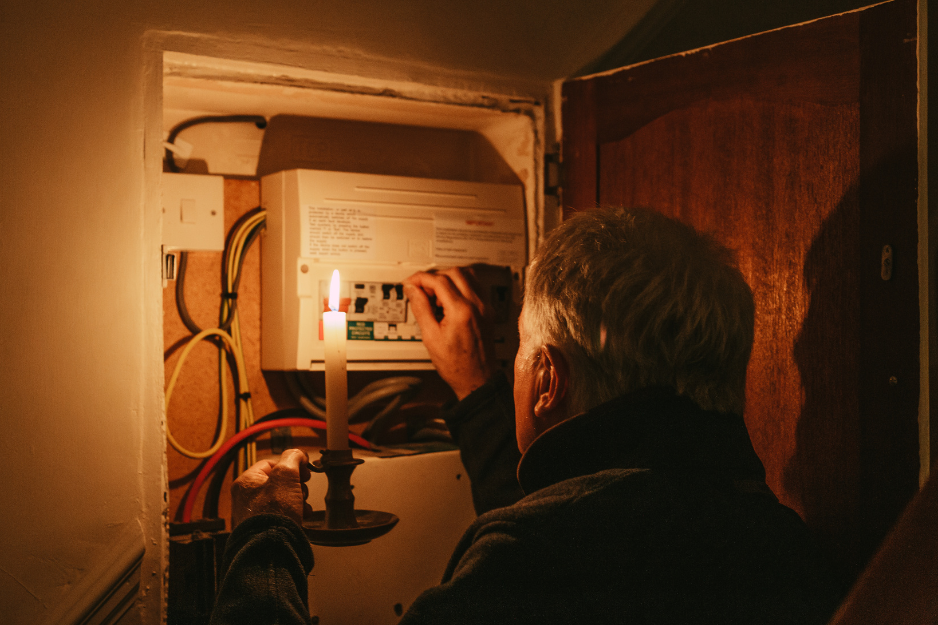
What should you do when the power goes out during a heat wave?
Without air conditioning, indoor temperatures can climb to dangerous levels within hours. The immediate priorities: identify who in the household is most vulnerable (children under 4, adults 65+, people with chronic conditions or on temperature-sensitive medications), move refrigerated medications into a cooler with ice and a thermometer (FDA guidance for insulin is 36–46°F), keep the refrigerator and freezer closed (food stays safe about 4 hours in a closed fridge, 48 hours in a full freezer), and run any generator outdoors only, at least 20 feet from windows and doors. If indoor temperatures stay above roughly 90°F, relocate to a cooling center.
When the Power Goes Out in a Heat Wave: A Home Safety Guide
Air conditioning is the primary defense against extreme heat. When it fails during a heat wave, a home can go from uncomfortable to genuinely dangerous within hours — and the people most affected are often the ones least able to recognize it happening.
This guide is ordered the way the decisions actually arrive: assess who’s at risk, cool the space, protect medications, handle food, run any generator safely, and know when it’s time to leave. Read what you need, in that order.
First, Assess — Duration and Vulnerability
Two questions come before anything else.
How Long Is the Outage Expected to Last?
Check your utility’s outage map or text alerts if you have phone signal. A two-hour outage and a two-day outage call for entirely different responses. Conserve phone battery immediately — it’s your line to utility updates, cooling center locations, and emergency services.
Who in the home is most vulnerable?
CDC identifies these groups as facing elevated risk during extreme heat:
- Children under 4 — limited ability to regulate body temperature and to communicate distress
- Adults 65 and older — age-related changes in thermoregulation and higher rates of chronic conditions
- People with heart, lung, kidney, or metabolic conditions
- Anyone on temperature-sensitive medications or medications that affect heat tolerance — diuretics, beta-blockers, antihistamines, and some psychiatric medications
- People who live alone, who may not have anyone nearby to notice early warning signs
If someone in the household falls into one of these groups, the timeline for acting is shorter. (For the full guide to heat risk with chronic conditions and medications, see our guide to summer heat and chronic conditions.)
Staying Cool Without AC
Ordered by effectiveness:
- Block the sun. Close blinds and curtains on sun-facing windows — south and west sides take the most direct exposure. Solar heat gain through glass is the single largest driver of indoor temperature rise.
- Go low. Heat rises. The lowest floor of the home — a basement, if you have one — can run several degrees cooler than upper levels.
- Move air. Battery-powered or rechargeable fans help the body cool through evaporation. Important caveat from CDC: once indoor temperature exceeds roughly 90°F, fans alone may not prevent heat-related illness. They circulate hot air rather than cooling it.
- Cool the body directly. Cool (not ice-cold) showers, damp cloths on the neck and wrists, and wet towels are effective even when the room itself can’t be cooled.
- Dress light. Loose, light-colored, breathable fabrics.
- Hydrate on a schedule. Don’t wait for thirst. Avoid alcohol and high-sugar drinks, which accelerate dehydration.
- Skip the oven. Cooking adds significant heat to a space that’s already struggling.
Protect Refrigerated Medications — This Comes First
Medications come before food in this guide for a reason. Spoiled food is expensive. Degraded medication is a health emergency.
Insulin and some biologics lose effectiveness when stored outside their recommended range. FDA guidance: insulin should be stored at approximately 36°F to 46°F.
- Move refrigerated medications into a cooler with ice as soon as an extended outage looks likely. A refrigerator only holds its temperature for a few hours.
- Use a thermometer in the cooler. Guessing is not adequate for medication storage.
- Don’t let insulin touch ice directly, and don’t let it freeze. Frozen insulin loses effectiveness and should be discarded. Wrap vials or pens in a towel or place them in a sealed bag to prevent direct contact with ice.
- Keep medications out of direct heat and sunlight.
- Know your specific product. FDA notes that most unopened insulin in its original packaging can be kept at room temperature for a limited period — commonly cited as up to 28 days — but this varies significantly by brand and formulation. Ask your pharmacist how long your specific medication stays safe outside refrigeration, ideally before an outage happens.
In a genuine emergency: CDC guidance acknowledges that you may have to use insulin that has been stored above 86°F. If so, monitor blood glucose closely and contact your healthcare provider as soon as the emergency ends. Insulin exposed to extreme temperatures should be replaced once properly stored supply is available again.
Food Safety — Different Numbers, Different Rules
Note the distinction: 40°F is the food safety line. 36–46°F is the medication range. These are not the same standard, and mixing them up leads to the wrong decision on both.
| Situation | Guidance (USDA/FDA) |
| Closed refrigerator | Food stays safe for about 4 hours |
| Full freezer | Holds temperature for about 48 hours |
| Half-full freezer | Holds temperature for about 24 hours |
| Perishables above 40°F for 2+ hours | Discard — meat, poultry, fish, eggs, dairy, leftovers, cut produce |
- Keep doors closed. Every opening accelerates warming. Make a mental inventory before you open, so you’re not standing there deciding.
- Group frozen items together. They hold cold longer as a mass than spread apart.
- When in doubt, throw it out. Food that has been temperature-abused can look, smell, and taste completely normal. Foodborne bacteria are undetectable by the senses.
(For the full guide to food safety in summer conditions, see our summer food safety guide.)
Generator Safety — Carbon Monoxide Kills in Summer Too
This section is short because it doesn’t require nuance.
- Run generators outdoors only. Not in a garage, basement, crawlspace, carport, shed, or any partially enclosed space — even with the doors and windows open.
- At least 20 feet from the home, with exhaust directed away from windows, doors, and vents (CDC/CPSC).
- Install battery-operated CO alarms if you don’t have them.
- Don’t use a charcoal grill, camp stove, or gas range for indoor heating or cooking during an outage. These produce carbon monoxide as well.
Carbon monoxide is odorless, colorless, and can be fatal within minutes at high concentrations. Summer outages produce CO deaths precisely because people associate the risk with winter heating and don’t think about it when running a generator for cooling.
CO poisoning signs: headache, dizziness, weakness, nausea, confusion, blurred vision. If you suspect CO exposure, get everyone outside to fresh air immediately and call 911.
Know When to Leave
This is the section people skip — and the one that matters most when an outage runs long.
- The threshold: if indoor temperature stays above roughly 90°F and can’t be lowered, it’s time to relocate. CDC notes that fans become ineffective at preventing heat illness at these temperatures.
- Don’t wait for symptoms. Confusion is a sign of heat stroke — and by definition, it impairs the ability to recognize that you need help. The decision to leave should be made while thinking clearly.
- Cooling centers are typically free and generally don’t require ID. Libraries, community centers, senior centers, shopping centers, and designated municipal cooling centers all provide relief.
- Find one: call 211, check your local health department or city website, or search for cooling centers near you.
- Alternatives work too. A friend or relative with power, a public library, a mall. Even a few hours in air conditioning meaningfully reduces heat strain on the body.
- For anyone in a vulnerable group, relocate sooner. The margin for error is smaller.
(For the signs that separate heat exhaustion from heat stroke, see our guide to heat exhaustion vs. heat stroke.)
Plan Ahead — Before the Next One
If you’re reading this during an outage, skip to the takeaways. This section is for afterward — or for the calm week before the next heat wave.
- Medical devices. If anyone in the household uses a CPAP, BiPAP, oxygen concentrator, powered wheelchair, or other essential equipment, contact your equipment supplier about backup power options and register with your utility’s medical baseline or priority restoration program. Do this before an outage, not during one.
- Ask your pharmacist now. How long does each refrigerated medication stay safe outside the fridge, and what should you do if an outage runs long? Two minutes at the counter answers questions you don’t want to research by flashlight.
- Freeze water containers. They double as ice packs during an outage and keep the freezer colder longer in the meantime.
- Keep a cooler and a thermometer accessible — not buried in a garage you can’t navigate without power.
- Charge power banks when heat waves are in the forecast.
- Identify your nearest cooling center in advance and write down the address.
- Check on neighbors who are older, live alone, or manage health conditions. During a heat wave outage, a knock on the door is a genuine safety measure.
The Bottom Line
A home without air conditioning during a heat wave can become dangerous faster than most people expect. The priority order is: assess vulnerability, cool the space, protect medications, handle food, run any generator safely, and decide whether to leave.
Medications come first. Insulin’s range is 36–46°F. Food’s threshold is 40°F. Different standards, different consequences. Generators go outdoors, 20 feet away, without exception — carbon monoxide kills in July as readily as in January. And if indoor temperature holds above roughly 90°F, the answer is to leave, not to wait it out.
The preparation that matters most — backup power for medical devices, a pharmacist conversation, a known cooling center address — happens before the outage, not during it. Ten minutes on a calm day is worth hours of improvising in the dark.
Frequently Asked Questions
How long does food stay safe in the refrigerator during a power outage?
About 4 hours in a closed refrigerator. A full freezer holds temperature for approximately 48 hours; a half-full freezer for about 24 hours (USDA/FDA). Discard any perishable food that has been above 40°F for 2 or more hours. Keep doors closed as much as possible — every opening accelerates warming.
How should you store insulin during a power outage?
FDA guidance recommends storing insulin at approximately 36–46°F. Move it to a cooler with ice and use a thermometer to monitor. Don’t let insulin contact ice directly and don’t let it freeze — frozen insulin should be discarded. Most unopened insulin can be kept at room temperature for a limited period (commonly up to 28 days), but this varies by product. Ask your pharmacist about your specific medication.
Is it safe to run a generator in a garage?
No. Generators should be run outdoors only, at least 20 feet from the home with exhaust directed away from windows, doors, and vents (CDC/CPSC). Running a generator in a garage, basement, carport, or any partially enclosed space — even with doors open — can produce fatal carbon monoxide levels within minutes.
When should you leave home during a heat wave power outage?
If indoor temperature stays above roughly 90°F and can’t be lowered, it’s time to relocate to a cooling center. CDC notes fans become ineffective at preventing heat illness at these temperatures. Don’t wait for symptoms — confusion is a sign of heat stroke and impairs the ability to make the decision. Anyone in a higher-risk group should relocate sooner.
Do cooling centers cost money or require ID?
Cooling centers are typically free and generally do not require identification. Libraries, community centers, senior centers, and designated municipal cooling centers provide air-conditioned relief during heat emergencies. To find one, call 211 or check your local health department or city website.
Key Takeaways
- Without AC in a heat wave, a home can become dangerous within hours. Highest-risk household members: children under 4, adults 65+, people with chronic conditions, and anyone on temperature-sensitive medications.
- Protect refrigerated medications first. FDA guidance for insulin is 36–46°F. Move medications to a cooler with ice and a thermometer — don’t let insulin touch ice directly or freeze.
- Food safety uses a different standard: a closed fridge holds about 4 hours, a full freezer about 48. Discard perishables held above 40°F for 2 or more hours.
- Run generators outdoors only, at least 20 feet from windows and doors. Carbon monoxide is odorless and can be fatal within minutes — CO deaths happen in summer outages, not just winter.
- If indoor temperature stays above roughly 90°F, go to a cooling center. They’re typically free and generally don’t require ID. Don’t wait for symptoms — confusion impairs the ability to decide.
- Plan before the next outage: arrange backup power for medical devices with your supplier and utility, ask your pharmacist about medication storage limits, and freeze water containers to use as ice.
Published by LifeX Research Corp. LifeX Research Corporation is a health data research organization that analyzes real-world health trends and population health patterns. The organization operates in connection with an ERISA-governed, self-funded employee benefit plan and does not sell, market, broker, or underwrite health insurance.